

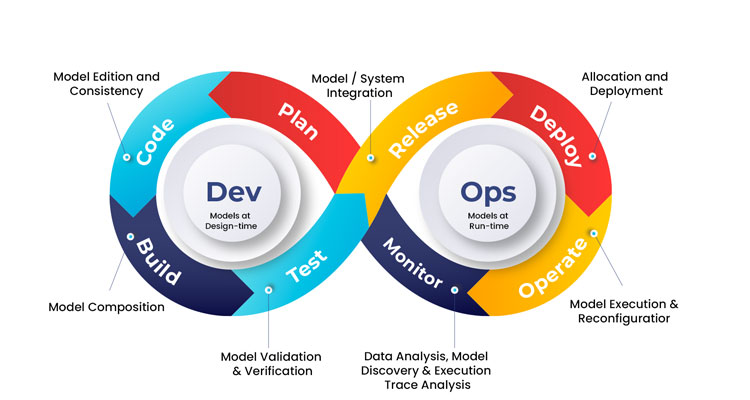
What Is DevOps
Software development has come a long way, surpassing traditional approaches. The conventional division of responsibilities between operations and development has often led to snags, hold-ups, and poor software quality. However, the introduction of DevOps marked an unprecedented shift in optimizing processes and tackling persistent issues. DevOps for software development has emerged as an essential component of success for companies worldwide in the Novus era.
More than having an excellent product and a robust strategy, delivering high-quality software is necessary for success in this dynamic industry. The development process’s pace can determine the success or failure of an organization.
DevOps fosters a culture shift that strives to provide higher-quality software much faster and is regarded as the next evolutionary leap in cross-functional team collaboration. This blog will help you understand DevOps in detail and why it is essential to contemporary software development.
The software development (Dev) and IT operations (Ops) are combined into a coherent framework by the constantly evolving principles and set of practices known as DevOps. Its primary objective is to enhance and expedite the software development process by promoting cooperation between the operations and development teams.
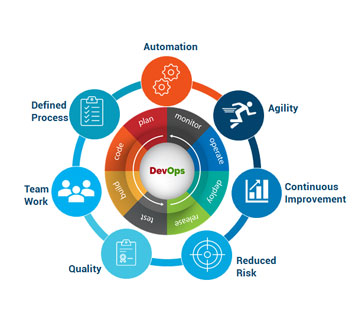
Below are the key benefits of DevOps. Let’s dive into the details:
Improved Collaboration and Communication
DevOps fosters smooth collaboration and communication, which changes the dynamics of the organization. It simplifies processes by dismantling silos between operations, development, and other divisions. Real-time communication is ensured by this synergy, which improves openness and collaboration amongst cross-functional teams. The outcome? Quick decision-making, fewer bottlenecks, and a coordinated strategy for accomplishing shared objectives.
Accelerated Development Cycle and faster time to market
The ability to accelerate the development cycle is the core of DevOps. It drastically reduces the time needed for development, testing, and deployment by automating procedures and promoting continuous integration and deployment. In addition to increasing productivity, this speed guarantees faster product launches, satisfying consumer needs and establishing a competitive advantage.
Enhanced Quality and Reliability of Software
Continuous integration and deployment (CI/CD) is a critical component of DevOps, prioritizing software excellence over speed. It maintains a strict quality control procedure with automated testing, continuous monitoring, and iterative improvements. This leads to more dependable software, which lowers errors and improves user experience, strengthening client loyalty and trust.
Automations
DevOps is centered around the freedom from manual, repetitive tasks. Teams can devote more time and resources to strategic and innovative projects with the help of automations. This aspect of DevOps makes it possible to automate code deployment, configuration management, and infrastructure provisioning, among other tasks, with greater efficiency, fewer errors, and consistent, trustworthy results.
The 7Cs of DevOps
A comprehensive approach to software development and deployment is represented by the 7Cs of DevOps, which strongly emphasize cooperation and ongoing improvement:
Continuous Operation
It guarantees the software will continue functioning smoothly and dependably after distribution. Continuous monitoring, maintenance, and assistance are necessary to ensure uninterrupted services for end customers.
Continuous Planning
Continuous planning is encouraged by DevOps to match business objectives with development goals. It uses iterative planning cycles to ensure that it can be adjusted to changing market conditions and technological breakthroughs.
Continuous Integration
The approach entails incorporating code modifications into a shared repository regularly. This guarantees the developers’ code integrates seamlessly, reducing integration concerns and allowing for rapid feedback loops.

